Washington, DC
The Anacostia Project – A conversation with Krista Schlyer
Katrina D Lashley Issue 8 Winter, 2017
Katrina D Lashley Issue 8 Winter, 2017
Leopard frog in the Anacostia River watershed, Washington DC metro area.
©KristaSchlyer.comSeven years ago, Krista Schlyer was introduced to the Anacostia River for the first time after thirteen years as a resident of the DC area. The delay in introduction was due to reputation. “Going into it, my preconception was what a lot of the people in the area had. ‘It’s dirty…polluted, degraded.’ “I kind of had written it off. That’s the idea you get when you come to DC and have lived in the area for a while.” Schlyer was soon struck by another reality, the resiliency of the area’s eco-system. “I could see all the trash and the pollution but could also see a lot of birds. I saw a beaver that day, a lot of fish and turtles…I was also struck by the stretch of the river between Bladensburg and the Kenilworth Aquatic Gardens and the Arboretum that day and how natural, wild and beautiful it was. I had no idea.”
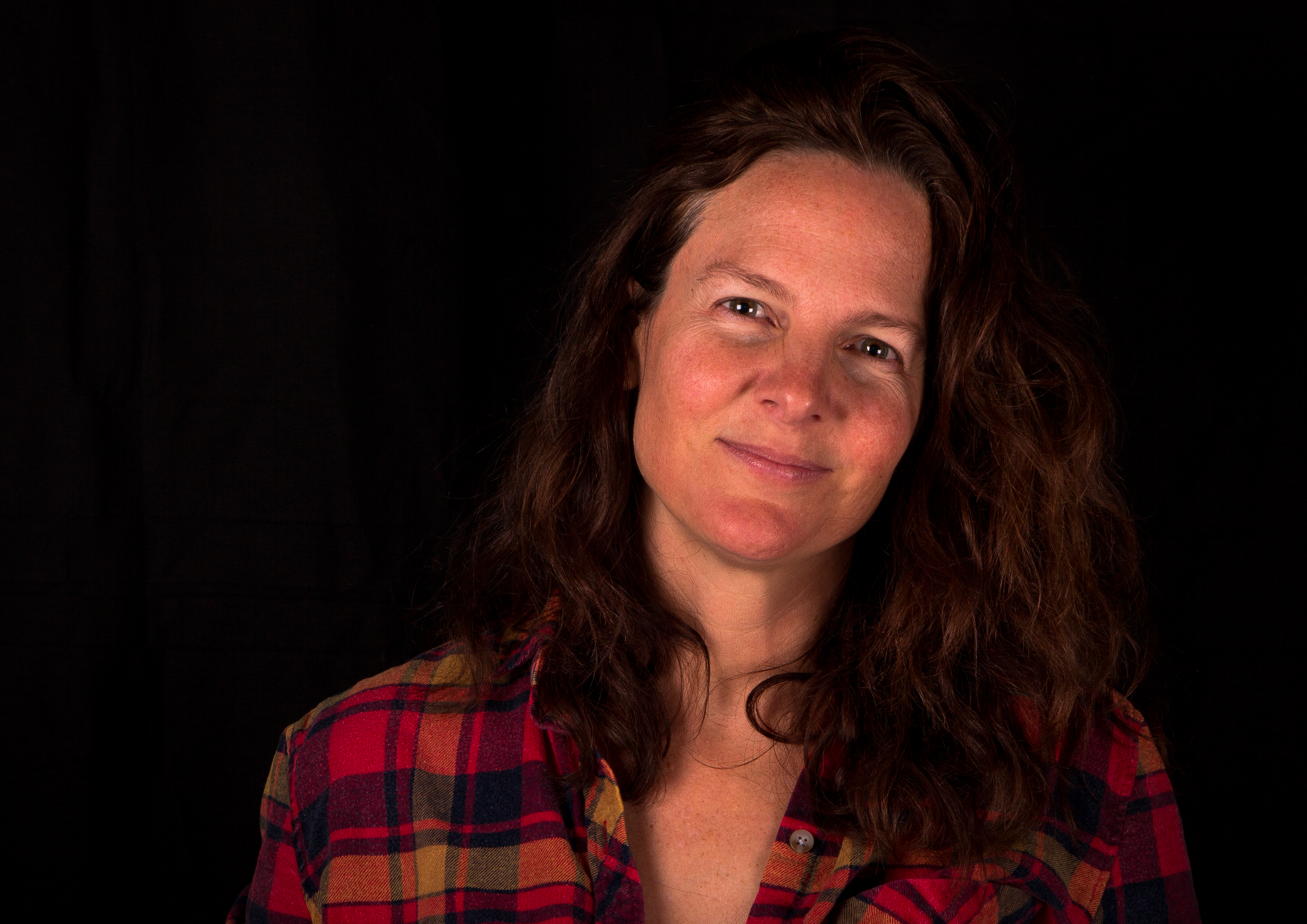
Krista Schlyer is an award-winning photographer and writer focusing on conservation, biodiversity and public lands.
Photo Credit: Courtesy Krista SchlyerThis first experience with the Anacostia River was rooted in a project for the International League of Conservation Photographers which was sending photographers to various parts of the Chesapeake Watershed. Schlyer had been assigned to the Anacostia, Potomac, and James watersheds, locations closer to home, a contrast to where much of her career in documentary photography and writing with a focus on conservation had taken her. The impact of that day on the Anacostia encouraged her to focus more of her efforts in her own home ecosystem.
Schlyer’s path to a career in conservation was a natural progression from her early childhood in rural areas where she remembers hikes spent looking for snakes and butterflies. Her later childhood years were spent in more urban areas which led her away from those earlier connections to the natural world. An accident and time spent recuperating changed her path once again. “My mom took me to the mountains while I was recovering, she would take me to different places. I think that kind of changed something for me…it made me remember what I’d learned from childhood, how much that meant to me, being around wildlife and healthy ecosystems. That moment is when I started to gravitate more towards nature and the natural world.” Schlyer continued in her work as a political journalist until a year spent traveling the country. Visiting the various National Parks, convinced her it was time to focus her various interests and skills, journalism, photography, and an interest in conservation, into a career path.
Photography has been a means of engaging the community.
The first project in which these interests intersected started in 2007 along the US-Mexico border with an assignment for Wildlife Conservation Magazine which was featuring a story on the impacts the construction of the border wall could have on trans-migrating Bison who moved back and forth between borders. “We were up in a plane trying to find these bison, and we spotted them right at the moment they were crossing the border…it was a barb wire fence they’d broken down. There was that light bulb that went on in my head that said ‘Oh my gosh!’” Why I had to see that with my own eyes, to have that lightbulb go on I don’t know, but that’s true of most people in general. We can be told about something, but unless we see it for ourselves or see a photo that helps us understand it, it just doesn’t enter our consciousness. I found as soon as I showed those photographs and talked to people about it, they would respond with concern.”
Schlyer has used images to engender the same connection and concern to her home watershed. Following her 2010 introduction to the Anacostia, Schlyer spent more time on the river, getting to know the various organizations and people advocating for its health and the health of its communities. Connecting to the community proved to be a challenge. In contrast to her work along the border, she found many people who have been advocating on the river’s behalf for a long time and realized she would have to prove herself and her intentions – treading slowly, gaining trust, and proving she’s committed to the work.
Photography has been a means of engaging the community. In a presentation for the DOEE, she was able to see how individuals who have been a part of efforts to restore the Anacostia were impacted when presented with depictions of the watershed. It allowed them to connect their work to the story of the river itself, to step beyond the pockets they have been working in and see the Anacostia’s story laid out with their efforts and the resulting impacts included. “Even though you’re getting frustrated at this moment, there was a before that was a lot worse, that means there’s a future that can be a lot better, and you’re playing a part in that.”
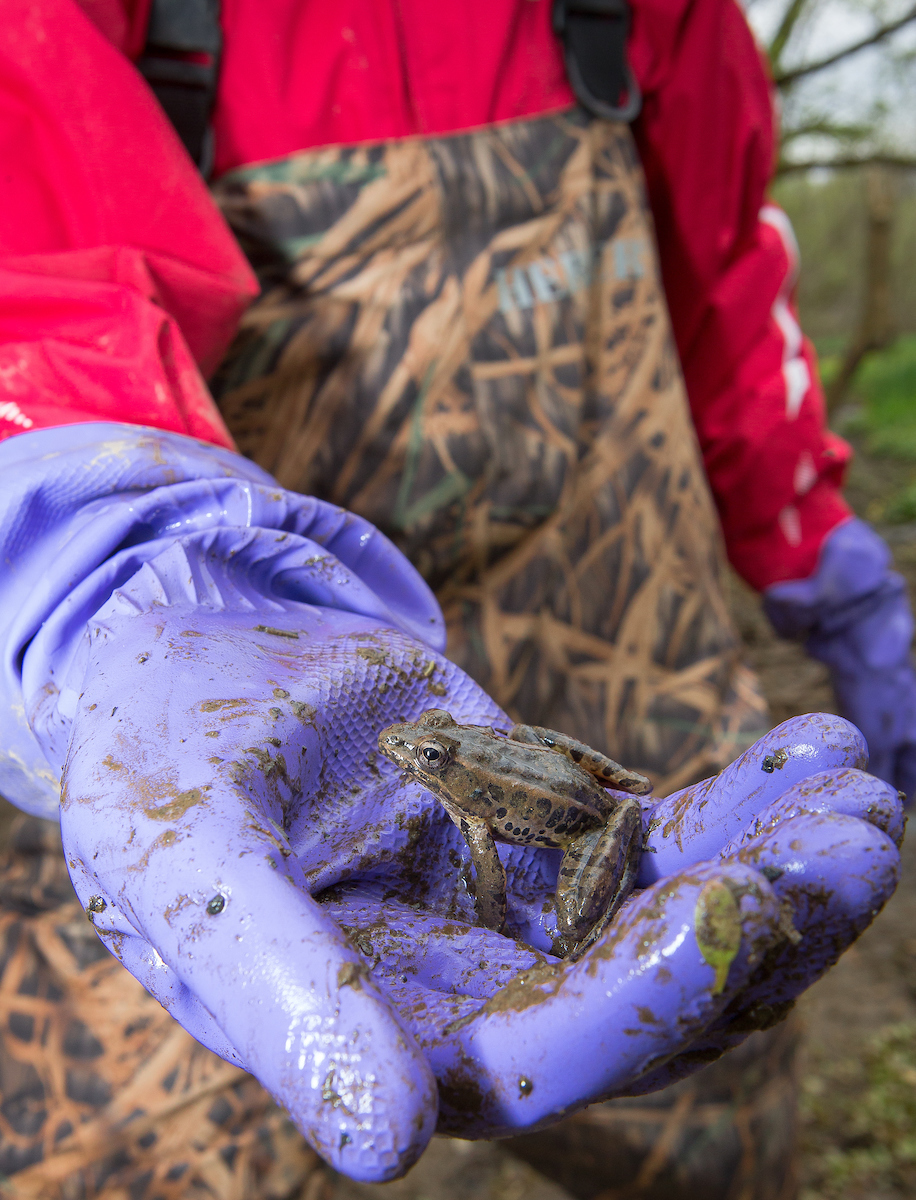
Leopard frog in the Anacostia River watershed, Washington DC metro area.
Photo Credit: ©KristaSchlyer.com“The degradation that’s happened historically to this river parallels the degradation that has happened to the human community.” – Krista Schlyer
Schlyer’s focus has shifted from the documentation of the early years of the project to exploring how the documentation can be used in a meaningful way. One avenue is a book on the Anacostia. “It’s an homage to a Sand County Almanac, Aldo Leopold’s book, which was written in the 1940’s. At the time, he was looking at the disappearance of this place he loved.” Based loosely on this framework, the book will try to convey a sense of place and care for the watershed and its communities. Going month by month, the book will start by tracing the natural history of the watershed, the years it took to build the landscape. It will then move into exploring the challenges the river has faced weaving history, community, ecology, and degradation in all forms into the narrative. “I think that a lot of times we as people see ourselves in human communities and even those human communities we make smaller and smaller so that we only have to care about those who fit into our community. The truth is we’re all part of the whole human community, but we’re also part of the land community, and we play a part whether we acknowledge that or care about it, the part we play on the land affects us, our community. We see that all the time in the Anacostia. The degradation that’s happened historically to this river parallels the degradation that has happened to the human community.”
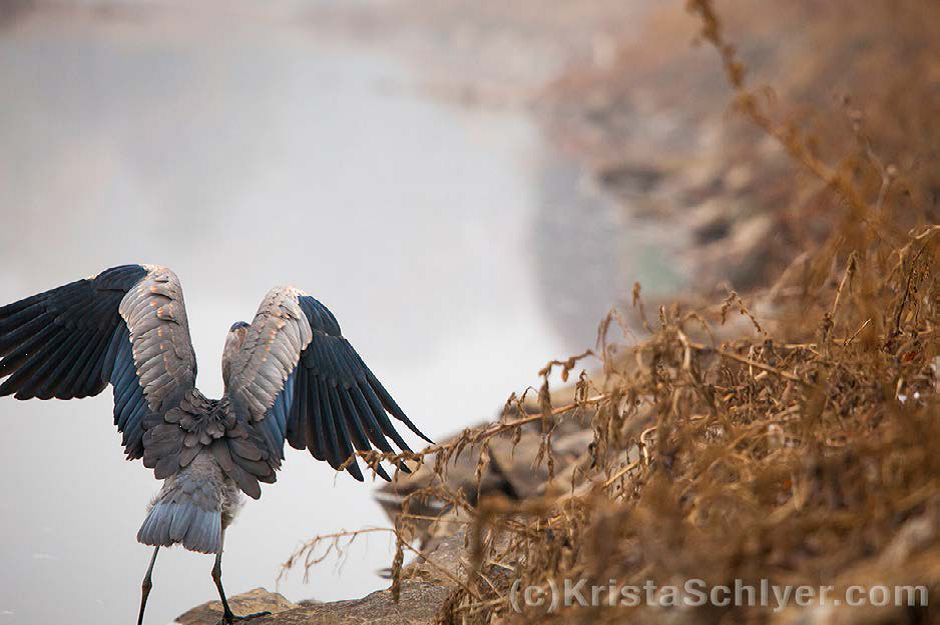
A great blue heron moves beyond theory along the Anacostia
Photo Credit: ©KristaSchlyer.comThe manner in which the Anacostia’s story will be presented reflects the comprehensive lenses through which many communities have experienced, viewed, and tackled the challenges to their waterways and themselves. And while Schlyer sees a move toward an understanding of the necessity of such an integrated approach, she believes for many, that approach is still a novelty. She points to the progression in her own work. “This book is going to be much more complicated than the last book I wrote about a landscape. I’m really glad to do this one in this way because I understand this landscape more complexly. The more we can do that, the more we can look at these places and all the connections that make up the ecosystem…. we always use the word “ecosystems” as something related to the natural world, but all these ties that connect the salamander to the vernal pool to the forest, there is a tie that is connecting us too and our history. The more we can see these connections and express them in different ways, the more we’re going to get to the important changes we need to make.”
“You can tell people all you want that this river is a beautiful place, but if they don’t see, it’s just a theory. If there’s a photograph of a beautiful, great blue heron, it’s much more likely they’re going to want to spend some time on the river, they’re going want to protect it.” – Krista Schlyer
Another means of using her documentation in a meaningful way is by providing easier access to the very images that can serve to connect people to the Anacostia. Schlyer is working toward a royalty-free database of images that could be used by those advocating for the Anacostia watershed. Organizations constrained by funding often lack room in their budgets for the documentation and storytelling which serve to convey the message that “this place matters.” In order for people to engage with the Anacostia, it must move beyond the realm of ideas to reality. “You can tell people all you want that this river is a beautiful place, but if they don’t see, it’s just a theory. It’s just disconnected. If there’s a photograph of a beautiful, great blue heron, it’s much more likely they’re going to want to spend some time on the river, they’re going want to protect it. Those images are really important. They’re part of a whole toolbox.”
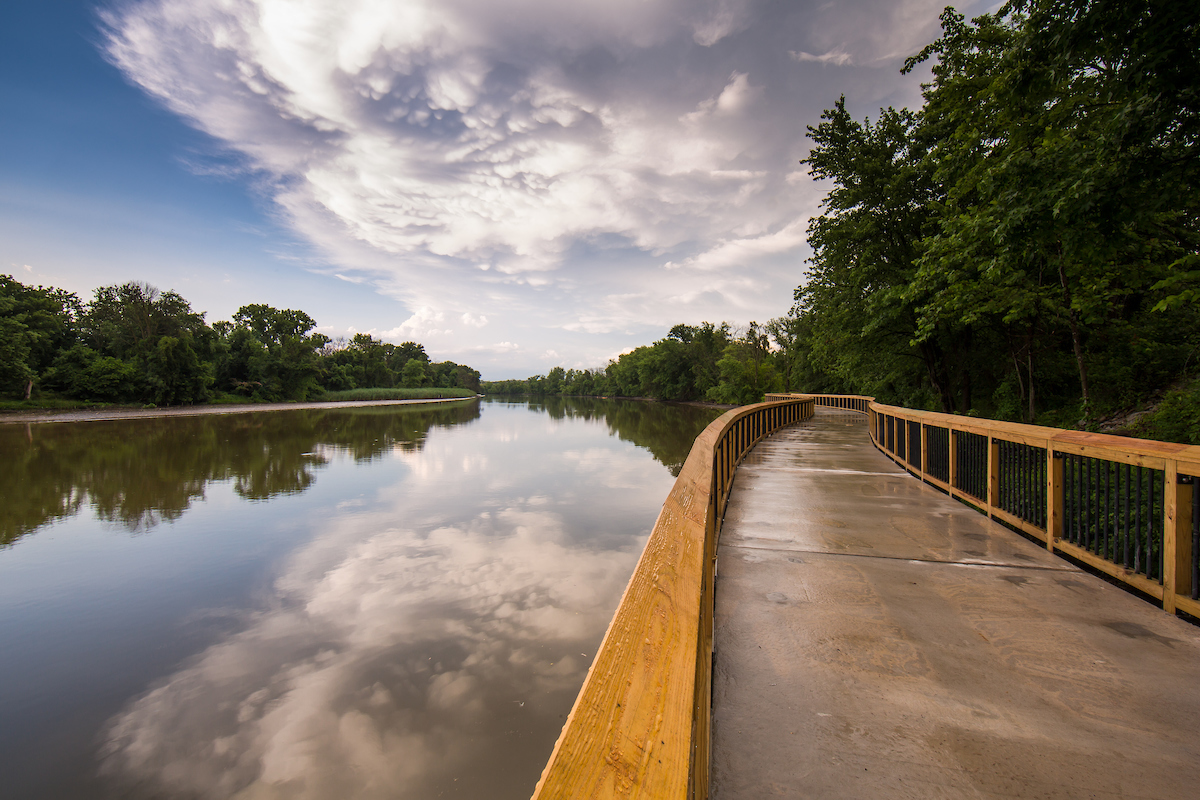
A quiet moment along the Anacostia River. The Anacostia River Trail, at the boundary of Washington DC and Maryland.
Photo Credit: ©KristaSchlyer.comHear bonus audio:
Being a storyteller and a photographer
For more information:
https://kristaschlyer.com/anacostia/