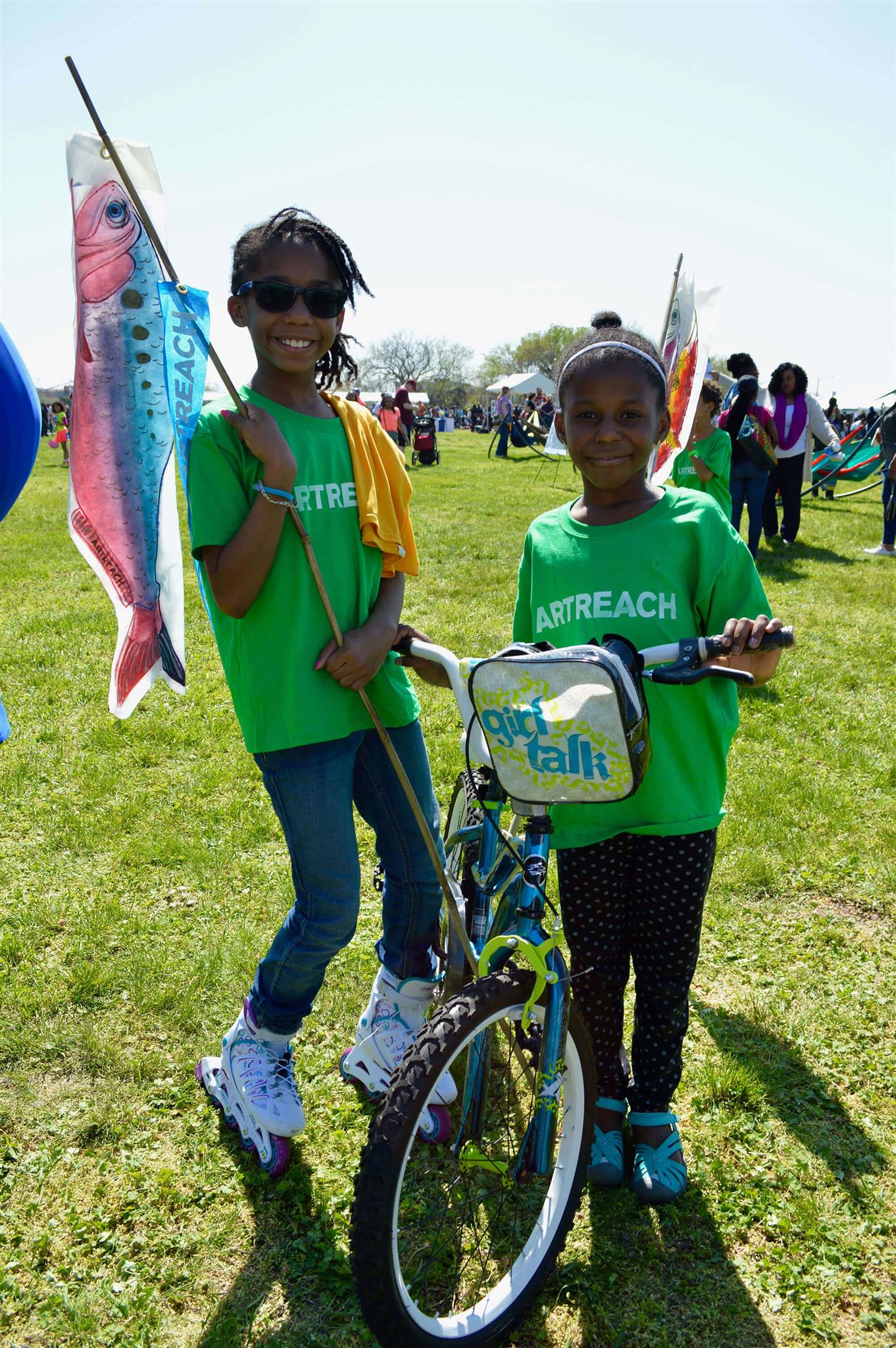
On a warm spring day last April, a herd of bicycles cruised alongside the Anacostia River. There were over 100 bikes in the group, and they moved slowly, together. At first glance, there didn’t seem to be too much in common between them. Some of the riders were older, some were young. Some were from out-of-town; some had lived their whole lives along the Anacostia. And their bikes rolling past ranged across colors and sizes and purposes. One wasn’t a bike at all, but a pair of rollerblades worn by a 12-year-old girl. However, above her head and above each bicycle a windsock, painted by hand and crafted to resemble a fish found in the river, fluttered in the breeze, almost as if it were swimming in the wind. With this in sight, you actually began to see the bikes moving more as a school than a herd.
ArtReach students join the fish bike parade at the Anacostia River Festival with their “Korabori” inspired fish windsocks.
Photo Credit: ArtReach Staff
The second annual Fish Bike Parade, a part of the 2016 Anacostia River Festival, marked the culminating moment of a months-long project by ArtReach – a community arts program located at THEARC in Southeast DC that provides free visual arts classes, collaborative projects, and exhibitions for local communities, families and youth. Partnering with the GW Corcoran School of Art printmaking department, 11th Street Bridge Project, and the National Park Service, ArtReach held fish windsock workshops in community centers, art schools, and other partner organizations across DC. In these workshops, participants from local communities were able to screen print or paint their very own windsock and in turn learn about the history and ecology of the Anacostia River and some of the threats facing the waterway today.
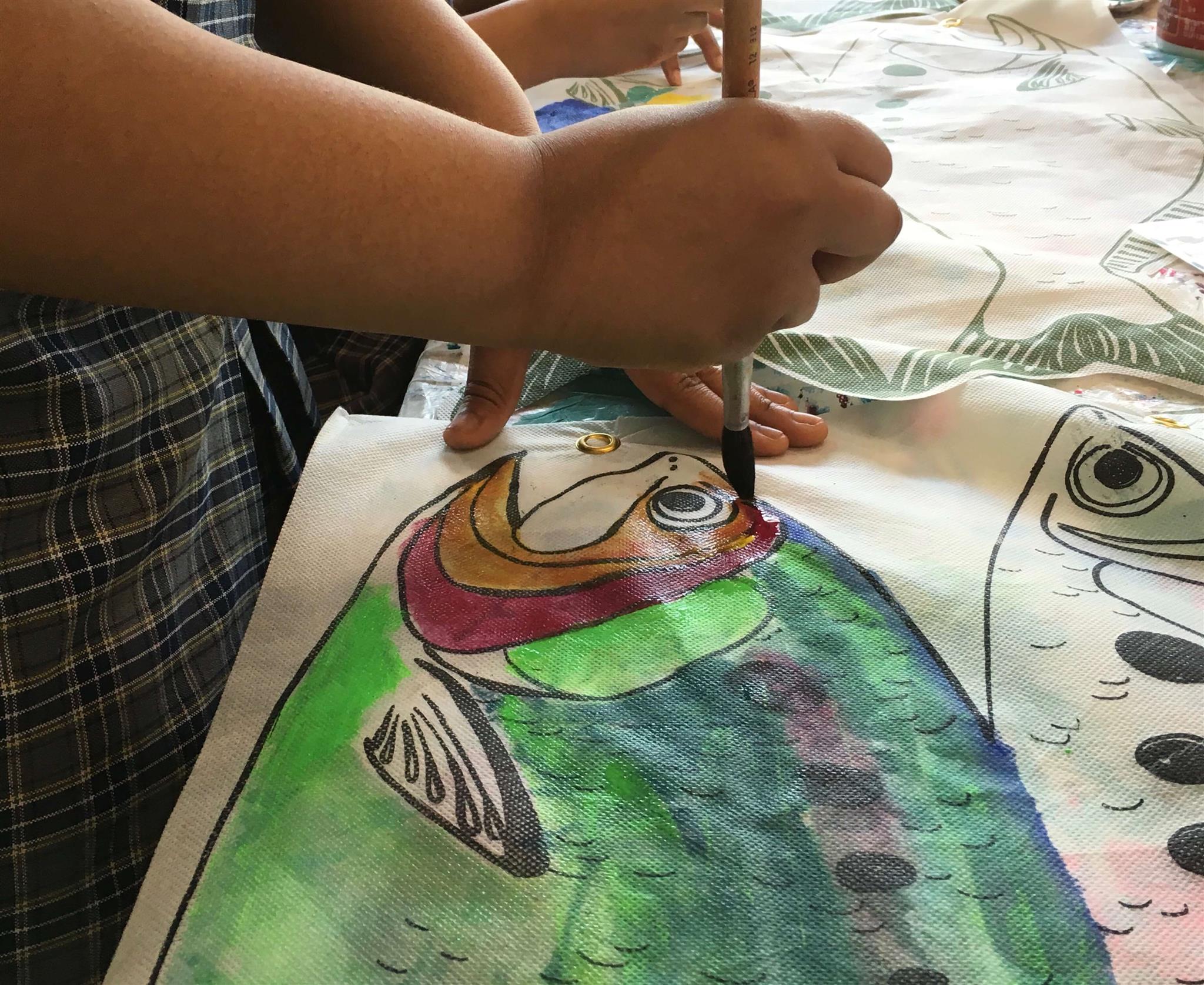
Washington School for Girls students paint their own American Shad, one of the four Anacostia River fish turned into windsocks.
Photo Credit: ArtReach Staff
Inspired by the Japanese tradition of creating carp-shaped flags known as “Koinoboiri,” ArtReach’s fish windsocks were designed to resemble five fish found in Anacostia Rivers…
Inspired by the Japanese tradition of creating carp-shaped flags known as “Koinoboiri,” ArtReach’s fish windsocks were designed to resemble five fish found in Anacostia Rivers -American Shad, Pumpkin Seed, Yellow Perch, Striped Bass, and the invasive Northern Snakehead. As participants decided over which fish to paint or screen print, they were told about how the fish participates in the local river ecosystems and how in some cases they even helped shape local and national history.
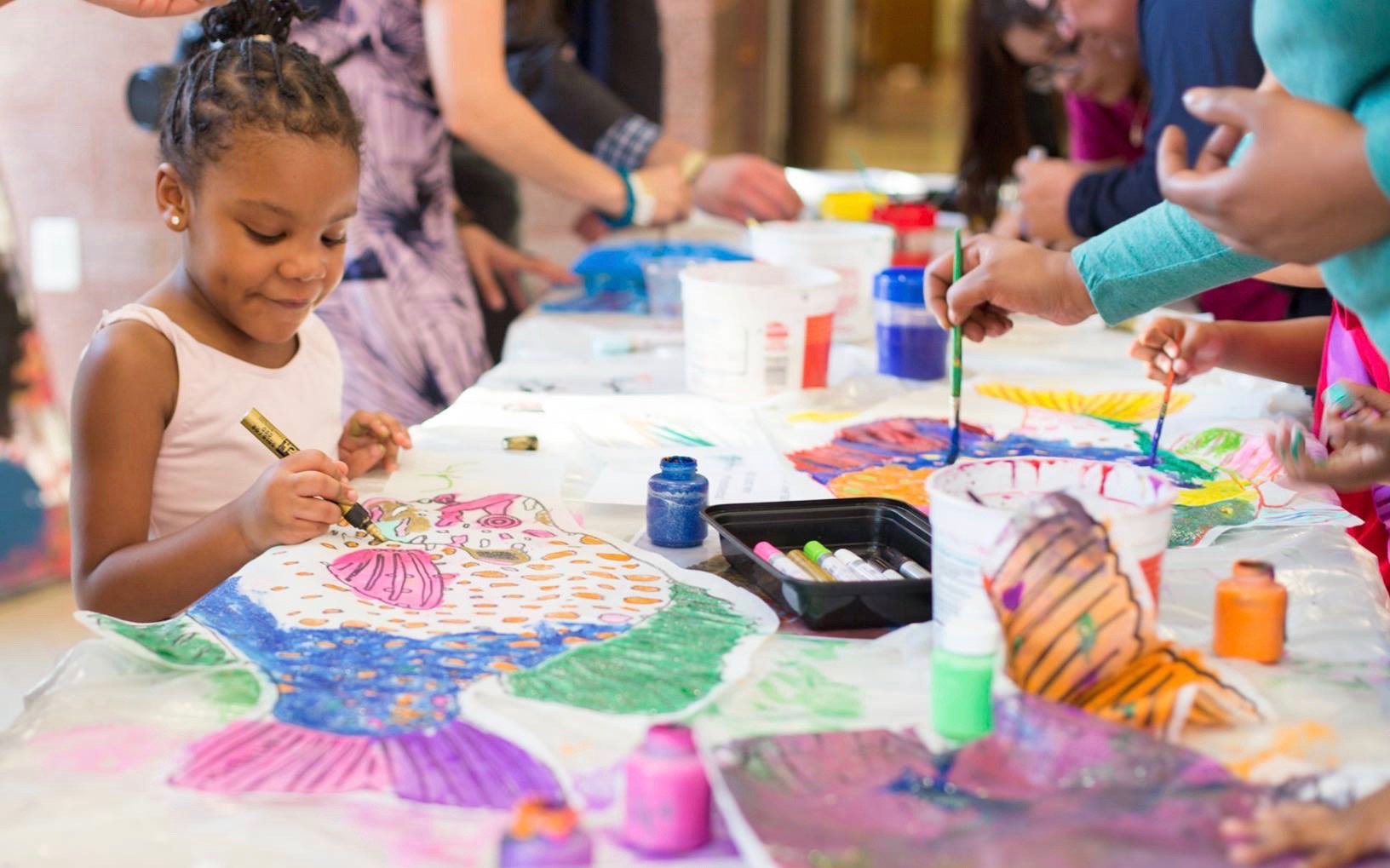
Families from Ward 7 and 8 paint fish windsocks depicting the American Shad and Pumpkinseed.
Photo Credit: ArtReach Staff
For example, the American Shad has more than once helped alter the path of our country. Near the conclusion of the American Civil War, some say the Battle of Five Forks was irreversibly tilted towards the Union Army when the Confederates were unable to stave off an attack without their commander’s presence. Their commander, Major General Pickett, had decided to have a late shad bake lunch a mile and half away from the battle site. Prior to that, George Washington had relied on the American Shad – a reliable fish crop due to its annual upstream migration – to feed his armies and to save his properties at Mount Vernon when his crops proved unprofitable. Of course, some would also say in saving his lands Washington was the first to overfish the Shad and start the depletion of its populations.
The individual fish species, especially the invasive Northern Snakehead, also served as great jumping-off points to discuss and ask questions about the threats facing our local waterways. How are invasive species like the Snakehead impacting native fish like the Pumpkin Seed and Striped Bass? How did they and other invasive species get here? What are we doing to cut down on their impact? How is pollution and run off affecting the health of fish species? What can communities do to help clean waterways, even when they don’t live right by the river?
The stories and questions surrounding these fish and their habitats helped create rich and valuable conversations during arts workshops hosted by ArtReach and community partners such as the Corcoran School of Art, the Washington School for Girls, Stanton and Malcolm X Elementary Schools, Black Swan Academy, JumpStart, Calvary Women’s services, and the Washington Area Bike Association. In all, ArtReach hosted 32 workshops at 15 locations around Washington, DC, in the months leading up the Festival. Each offered an opportunity for youth, parents, and community members to find a real connection with local waterways through the creation of a fish – completed with their own hands and marked by their own self-expression – that live in our rivers and face real and significant problems today.
The workshops also helped introduce community members to local river advocates from multiple disciplines.
The workshops also helped introduce community members to local river advocates from multiple disciplines. Through partnerships with such environmental organizations as the District Department of Energy and Environment Aquatic Recreation Center (AREC), Earth Conservation Core, and the Anacostia Watershed Society, ArtReach was able to provide local youth and families with opportunities to engage in environmental activities and learn about some of the work being done to combat environmental degradation. In the future, ArtReach will look to foster even greater partnerships with ecology groups and provide them with more opportunities to speak at art-making workshops and lead ArtReach groups through different activities. We also hope to work with ecology organizations and the George Washington University’s Biology Department in the creation of infographics and visual materials that can be presented at workshops and handed out to participants. Though the open conversations about local waterways and the stories and questions raised around the fish species were often lively and engaging, it would be good to have more scientific visuals to ensure points are being made and people are coming away with a real understanding of local ecosystems and the issues they face.
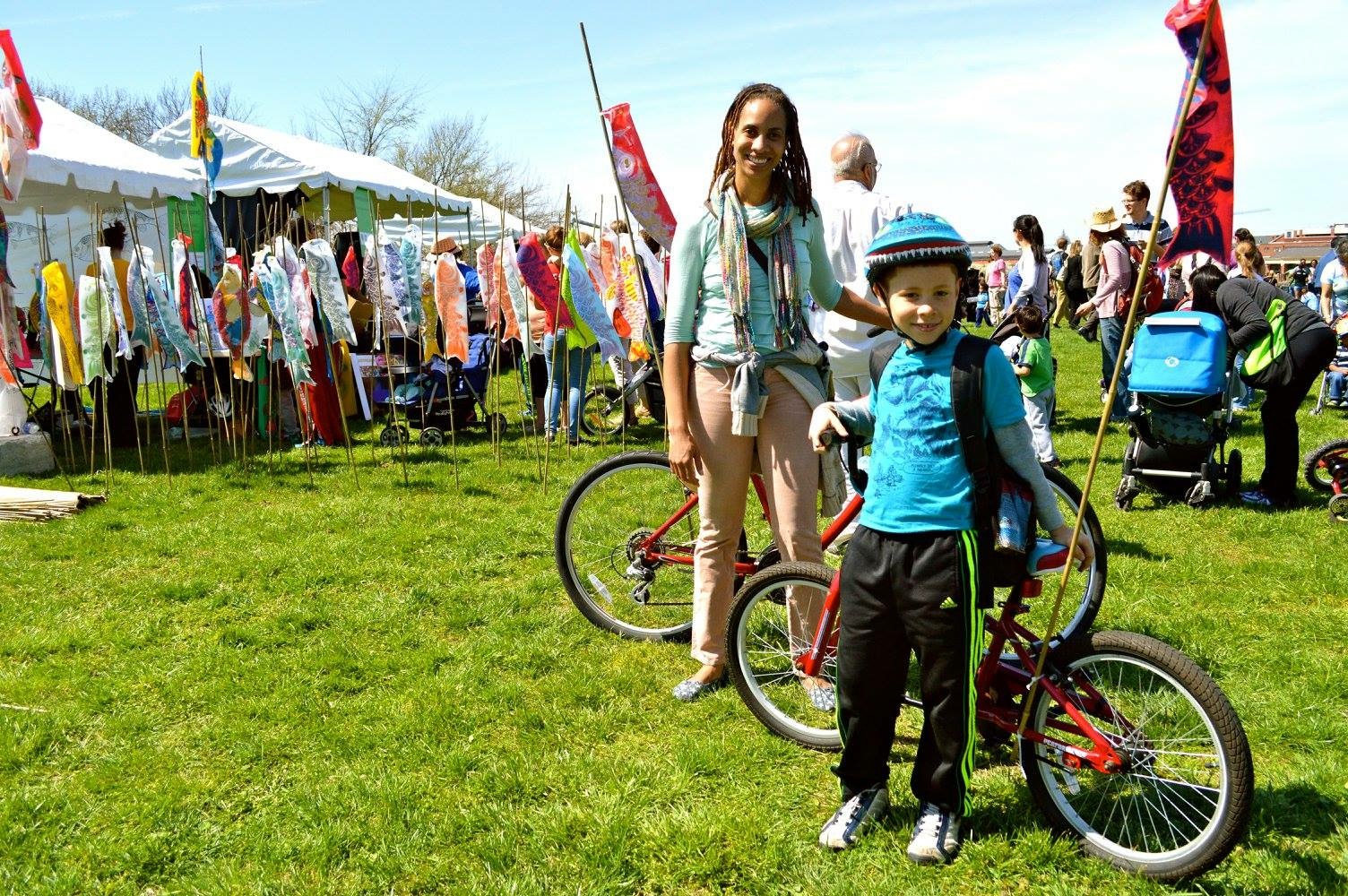
Mother and son prepare for the parade with fish windsocks attached to their bikes.
Photo Credit: ArtReach Staff
Of course, one thing that will remain the same is that the end of each workshop will be filled with an invitation for future engagement. Each person who makes a fish windsock is asked to bring it to the Anacostia River Festival, attach it to their bike, and take part in the Fish Bike Parade. They are asked to take part in something bigger than themselves, to show up and be counted as someone who cares about local waterways, local fish and the issues they face, and then to move together and form a mobile community or school of people taking action to increase awareness and engagement for our river, its ecosystems, and the fish living within it.
Melissa Green is Director of ArtReach and the Community Gallery at THEARC with George Washington University. For over ten years—first as Director of Community Partnerships at the Corcoran Gallery of Art and now in her role at THEARC—Green has overseen the ArtReach program, which provides free afterschool arts education and community arts engagement projects for communities in Southeast Washington, DC. Through her leadership, the program has developed into one of the most respected youth arts programs in the District and has worked with such organizations as The Smithsonian’s Freer Gallery, the National Park Service, Eleventh Street Bridge Project, Art in Embassies, and the Office of the State Superintendent of Education. Green also spearheaded the development of the ArtReach Master Class, Portfolio Development and Visiting Artist Program. In 2013, ArtReach was awarded the Mayor’s Arts Award for Innovation in the Arts.
Beside her work with ArtReach, Green has taught community and museum arts engagement at George Washington University and the Corcoran College of Art + Design. She has a passion for building community through collaborative, cross-disciplinary and socially engaged creative practice.