Washington, DC
Better Results over the Long Haul, Driven by Communities
Hyon K. Rah Issue 8 Winter, 2017
Hyon K. Rah Issue 8 Winter, 2017
In a recent meeting, a colleague of mine – an engineer – mentioned his discomfort with the use of the term “community-driven” to describe a project he felt was technologically focused. “It sounds soft and gooey,” he said, adding the term somehow weakened the technical and economical validity of the project. This startled me, since from my perspective, the technologies involved serve as a means to an end for the project in question: to serve the community’s basic needs for clean water and energy, thereby providing a stable foundation upon which to create economic opportunities and other development. Having come from a design background, despite my later training as an engineer, I have always considered these technologies and plans for basic infrastructure as a basis for creating livable places for people – spaces people can take ownership of without having to deal with the negative long-term consequences from short-sighted development.
I think we, as practitioners, tend to shift by default into the role of playing experts in our specialized fields without first understanding what is needed or desired in the communities in which we work – and, more importantly, with and for whom we work. Such context and how our particular areas of expertise relate to the big picture are often not considered, whether by habit (sticking to what one’s used to doing) or intention (no incentive to do “extra work”). This preference for isolated, specialized practice is also due to its perceived efficiency in terms of the amount of time and money spent on the effort, although long-term effects after implementation are almost never accounted for. We also forget the fact that, while we have training and experience in areas that could contribute to the development of these communities, none of us can possibly know and care more about the local conditions than those that call these places their home.
In the connected and fast-changing world we live in, where environmental, economic, and social issues run hand-in-hand, an approach tailored to address multiple issues across these areas is going to be more efficient and effective than an approach that only deals with one. While it may seem bothersome, learning about the issues communities are faced with day to day (which can include unexpected answers such as elephant intrusions into a village) can help make the important connection between the technical and technological advances and the tangible impact they will make within the community now and in the future. Furthermore, when figuring out ways to tackle local problems with quantifiable, technical solutions, if we took the time to survey locally available resources, especially sustainable sources of energy and water, we could significantly bring down the cost. Such an approach also creates opportunities to engage with community members before (to learn about local conditions) and after (to pass the baton upon completion) realizing the effort. Upfront engagement can build rapport and trust that can extend into subsequent interactions and collaborations, making future outreach efforts much easier. Lacking this crucial step of including the local community, many technologically-sound projects have later failed. In some such cases, when community members were left out, they were not apprised of how to use, maintain, and repair key components, often unclear of the implications of these new developments on their lives.
Aakha was set in motion by local community leaders who envisioned a better future for Assam – a future not limited by challenges such as lack of infrastructure, natural disasters, and reduced local employment opportunities since the closure of a sizable power plant in the area.
How does a community-driven approach work in real life? One example is found among the villages along the Brahmaputra River in northeastern state of Assam, India, where community-based development efforts are taking shape under the name “Aakha.” The word Aakha means “hope” in Assamese – and hope is something the project aims to bring to this area, where one-third of the population lives below the poverty line of less than $1.25 per person a day. Three out of four households are not able to light their homes at night due to lack of electricity. Despite being located in one of the most water-rich areas in India, about 80% of households in Assam do not have access to safe drinking water. The mighty Brahmaputra River, which provides water, transportation, and other amenities to the surrounding villages, turns on them several times a year when heavy rainfalls hit the area. In 2016 alone, 1.8 million people were affected by devastating floods.
Aakha was set in motion by local community leaders who envisioned a better future for Assam – a future not limited by challenges such as lack of infrastructure, natural disasters, and reduced local employment opportunities since the closure of a sizable power plant in the area. Seeing the potential to cultivate and sell the high-value medicinal herbs native to Assam, they formed a grassroots educational organization, called Organo. First order of business was to launch a program to educate local women on sustainable cultivation techniques for various types of medicinal herbs.
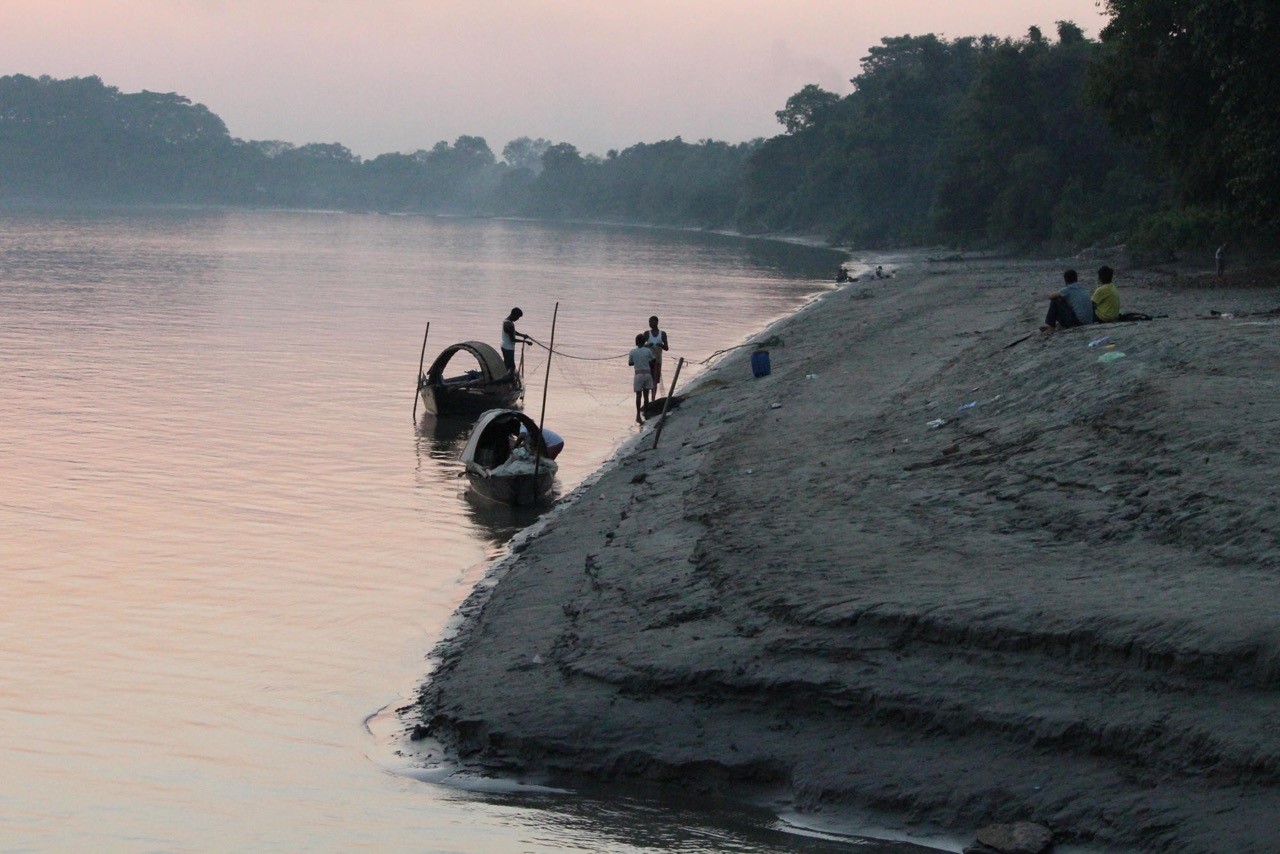
The Brahmaputra River provides access to transportation, water, and other amenities to its adjacent communities. When heavy rainfalls hit the area, it quickly turns into a source of devastation. Severe erosion along the edge of the river is also a problem that has caused concern among Assam’s locals.
Photo Credit: OrganoThe goal is this first processing center, and its community benefits will serve as a model for other villages along the Brahmaputra River in Assam, setting the stage for sustainable growth driven by local communities.
Once the educational program was up and running, the medicinal herbs’ supply chain to the markets in New Delhi and Kolkata was streamlined to increase the profit margin for the farmers. At this point, a realization hit: partially-processed herbs commanded higher prices and a seasonal advantage over fresh ones, and to reap those benefits, a local processing plant would be required.
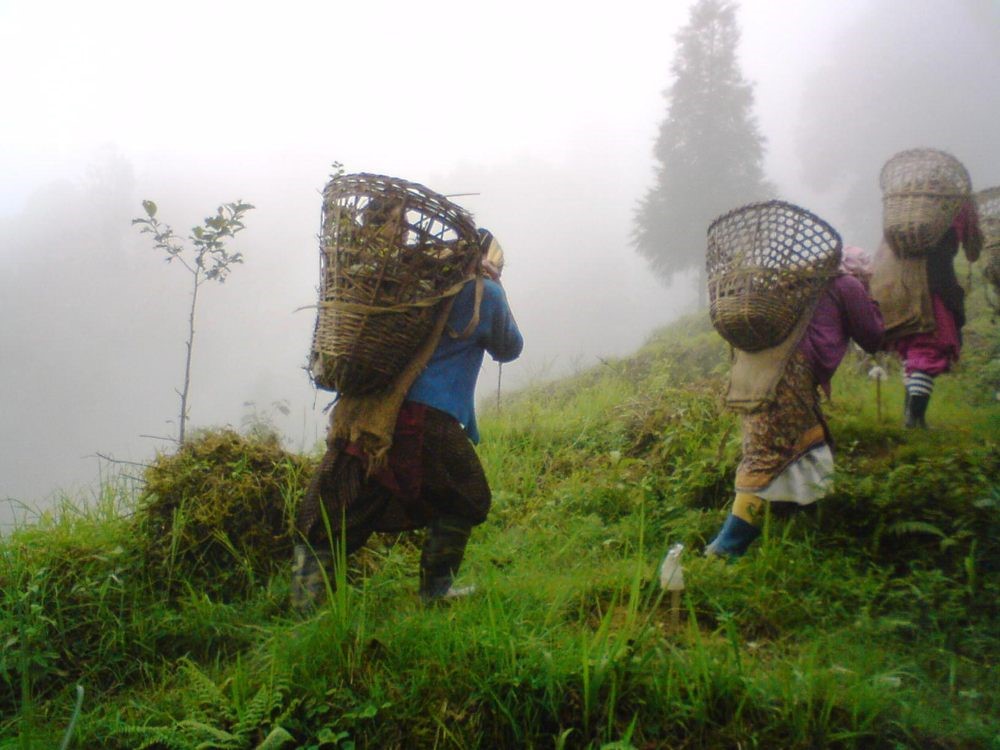
The community-driven and integrated approach taken in Assam will empower women with financial independence through high-value herb farming and conservation training, supported by sustainable water and energy infrastructure.
Photo Credit: OrganoAs part of this effort, the community leaders at Organo have had to reach out beyond its traditional partners to government authorities, researchers, and other local organizations. They also have sought out technical guidance on areas such as renewable technologies, water management, and various funding mechanisms, forming partnerships with entities as far as in Washington, DC. A multi-staged and inter-disciplinary consultation process is currently ongoing, and the plan is to power the processing plant using renewable technologies (a free source of energy once installed), without contaminating or tapping out the local water supply required to grow the herbs. The processing plant, in addition to increasing the income generated by the medicinal herb cultivation and supplying water and electricity to the community, would create new jobs for local men who have been unemployed or endured long commutes for work since the nearby power plant’s closure. The goal is this first processing center, and its community benefits will serve as a model for other villages along the Brahmaputra River in Assam, setting the stage for sustainable growth driven by local communities.
At first glance, the tangible outcomes of Aakha, including the medicinal herb processing plant, might seem like those of a typical top-down development project. On a closer look, however, one might be surprised at how many different issues the project addresses, from supplying clean energy and water to the local community and conserving endangered medicinal herbs, to empowering economic independence of community members (especially women, who had very limited options prior). Only an integrated approach, supported by an inter-disciplinary team and centered on the interests of the local community, could yield such results.